
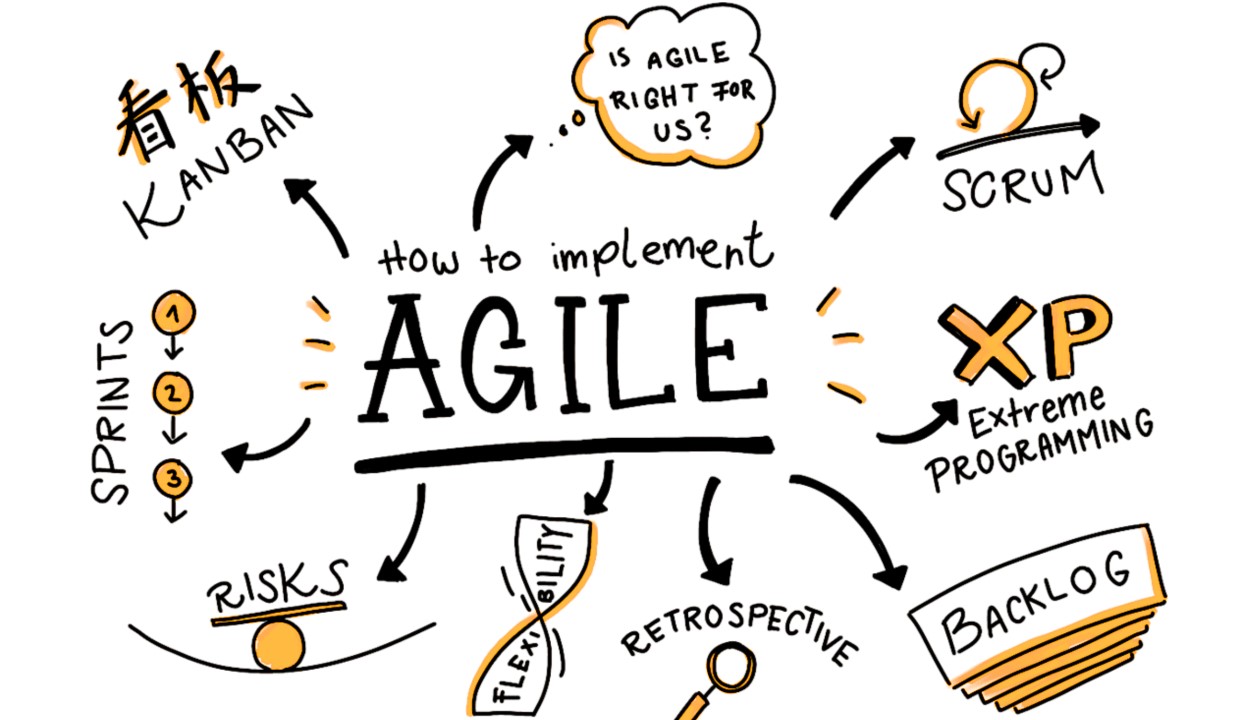

What is Agile Methodology?
Agile methodology is an iterative and flexible approach to project management and software development that prioritizes customer collaboration, continuous delivery, and adapting to change over following a fixed plan. Agile promotes small, incremental changes and emphasizes flexibility, communication, and rapid response to evolving requirements.
Core Principles of Agile:
- Individuals and interactions over processes and tools.
- Working software over comprehensive documentation.
- Customer collaboration over contract negotiation.
- Responding to change over following a plan.
Agile utilizes short, repeatable cycles (called sprints) that typically last 1-4 weeks. At the end of each sprint, teams deliver a usable increment of the product or feature, allowing for rapid feedback and course correction. This continuous cycle allows for quick adaptation to changes, making Agile particularly useful in dynamic or fast-changing environments.
How Does Agile Apply to Localization?
Localization refers to the process of adapting content for a specific language, region, or culture, including translating text, adjusting images, modifying date formats, and more. Agile localization incorporates the principles of Agile methodology into the localization process, ensuring that content can be quickly and continuously localized and delivered in alignment with the broader project goals.
In Agile localization, localization tasks become part of the iterative development cycle. This is especially useful in software development, web content management, marketing materials, and any other content that needs to be consistently and rapidly adapted to multiple languages or regions.
Key Steps to Implement Agile in Localization
- Set Up Cross-functional Teams In Agile, the development and localization teams should work closely together, often in the same sprint. Cross-functional teams may include developers, testers, translators, and localization engineers. The idea is to avoid silos and facilitate real-time collaboration and communication. These teams work toward delivering a localized product increment at the end of each sprint.
- Break Work into Smaller Tasks (User Stories) Agile uses user stories to break work into smaller, manageable chunks. A user story describes a feature or task from the perspective of the end user. For localization, this means creating user stories for each element of the product that needs to be translated or localized, whether it's text, images, or specific features. The stories might look like:
- "As a Spanish-speaking user, I want to see the website in Spanish."
- "As a French user, I want localized error messages that reflect regional terminology."
- Incorporate Localization into Each Sprint Localization tasks should be integrated into each sprint, with localization work being prioritized alongside software development tasks. For example, if a new feature is developed, the corresponding translations and cultural adjustments should be prepared and ready by the time the feature is released.
- Planning: At the beginning of the sprint, localization requirements are identified, and appropriate user stories are created.
- Execution: Localization work happens during the sprint, along with the core development tasks.
- Review: At the end of each sprint, the localization team reviews the work for quality, cultural appropriateness, and alignment with the source content.
- Retrospective: Teams assess how well the sprint went, what issues arose, and how the process can be improved in the next sprint.
- Continuous Feedback Loop Agile emphasizes frequent feedback, and this is crucial for localization too. After each sprint, the localized product should be tested by native speakers or cultural experts who provide feedback. This ensures that the translation is not only accurate but also culturally relevant and user-friendly.Key types of feedback include:
- Linguistic: Ensuring the translation is accurate and fluent.
- Cultural: Ensuring that images, colors, symbols, and idioms are appropriate for the target market.
- Functional: Ensuring that the localized product works as expected, especially when considering different character sets, screen sizes, and regional preferences.
- Automated Localization Tools To make Agile localization more efficient, tools like translation management systems (TMS), content management systems (CMS), and Continuous Localization platforms can help automate parts of the localization process, such as translation, version control, and integration with the development pipeline.Some popular tools include:
- TransifexCrowdinSmartlingPhraseGitLocalize
- Scalable and Flexible Process One of the major benefits of Agile is its flexibility and scalability. As projects grow, the localization efforts can scale up, adding more languages and regions incrementally. Teams can also pivot and adjust their approach depending on user feedback or market demands.
- Incorporate Localization into Continuous Integration (CI) and Continuous Delivery (CD) Pipelines Many development teams use CI/CD practices to automate the process of testing and delivering software. Localization can be integrated into this pipeline, so that as soon as new code or content is available, the localization team can immediately begin translating and localizing it. This helps ensure that localization is part of the overall software release process.
Benefits of Agile Localization
- Faster Time-to-Market: Localization becomes an ongoing process, allowing for quicker releases to global markets, reducing the need for long waits between source content development and final localized releases.
- Improved Quality: Frequent collaboration and feedback from native speakers and cultural experts help improve the quality of translations and ensure cultural relevance.
- Flexibility: Agile enables localization teams to adjust quickly to any changes in the project, such as shifting requirements or new target markets.
- Collaboration: Agile fosters better communication between development, product, and localization teams, resulting in smoother workflows and better coordination across departments.
- Scalability: Agile localization makes it easier to scale localization efforts, whether you’re adding more languages, handling more content, or expanding into new regions.
Challenges of Agile Localization
- Time Zone and Cultural Differences: In Agile teams, cross-functional teams might be working from different parts of the world, so coordinating tasks and feedback can be challenging.
- Balancing Speed and Quality: Localization needs to maintain high standards even in fast-paced Agile environments. This may require an investment in skilled translators, review processes, and tools.
- Inconsistent Content: Agile teams often release content in smaller chunks, which means the localization team has to handle frequent content updates. This can lead to version control issues and challenges in managing different translations for different versions of the software or website.
Conclusion
Agile methodology is a powerful approach for managing software development projects that has proven to be highly effective in localization efforts as well. By integrating localization into the development cycle, creating collaborative workflows, and prioritizing continuous feedback, Agile enables teams to deliver localized content rapidly, consistently, and with higher quality. However, it requires careful planning, coordination, and the right tools to ensure localization keeps pace with the development process.
Ultimately, Agile localization ensures that global audiences receive timely, accurate, and culturally appropriate content, helping businesses scale effectively in international markets.